
Should You Take a Probiotic Every Day?
What the Science Actually Says
Written by: Jessica Christiansen

Walk down the supplement aisle or scroll through social media, and you’ll quickly get the impression that everyone should be taking a daily probiotic. These supplements are marketed as a cure-all for gut health, immunity, digestion, skin concerns, and even mental health.
But does the science support taking a probiotic for the rest of your life? The answer is more nuanced than many people realize.
Probiotics Are a Tool—Not a Lifelong Necessity
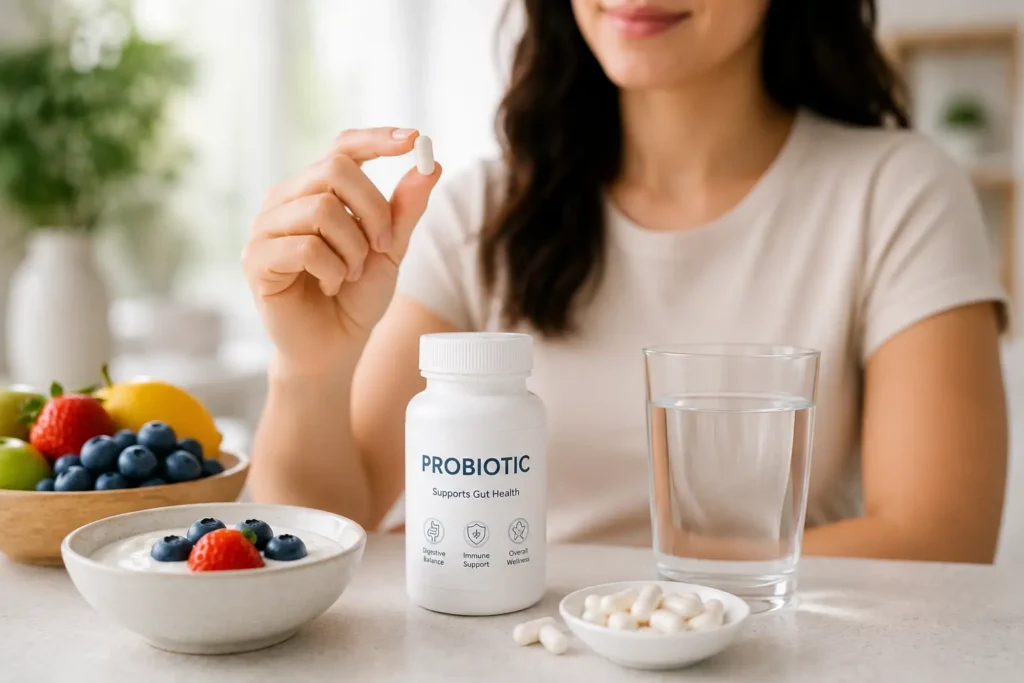
Probiotics are live microorganisms that can provide health benefits when taken in adequate amounts. They can be helpful in specific situations, such as after certain antibiotic treatments or for select gastrointestinal conditions. However, current research does not support the routine use of probiotics indefinitely in healthy individuals.
Rather than recommending lifelong supplementation, most experts encourage a personalized approach based on an individual’s symptoms, medical history, and specific health goals
We Still Don’t Know the Long-Term Effects
One of the biggest misconceptions is that because probiotics are “natural,” they must be completely harmless to take forever.
In reality, long-term safety has not been well studied. A large systematic review conducted for the Agency for Healthcare Research and Quality evaluated more than 600 clinical studies and concluded that while probiotics appear to be safe for most healthy people in the short term, there is insufficient evidence to fully understand their long-term safety because adverse events have not been consistently reported.
Simply put, we don’t have enough high-quality research to recommend lifelong supplementation.
Most Probiotics Don’t Stay in Your Gut
Many people assume probiotics permanently rebuild the gut microbiome. Surprisingly, this isn’t how they work.
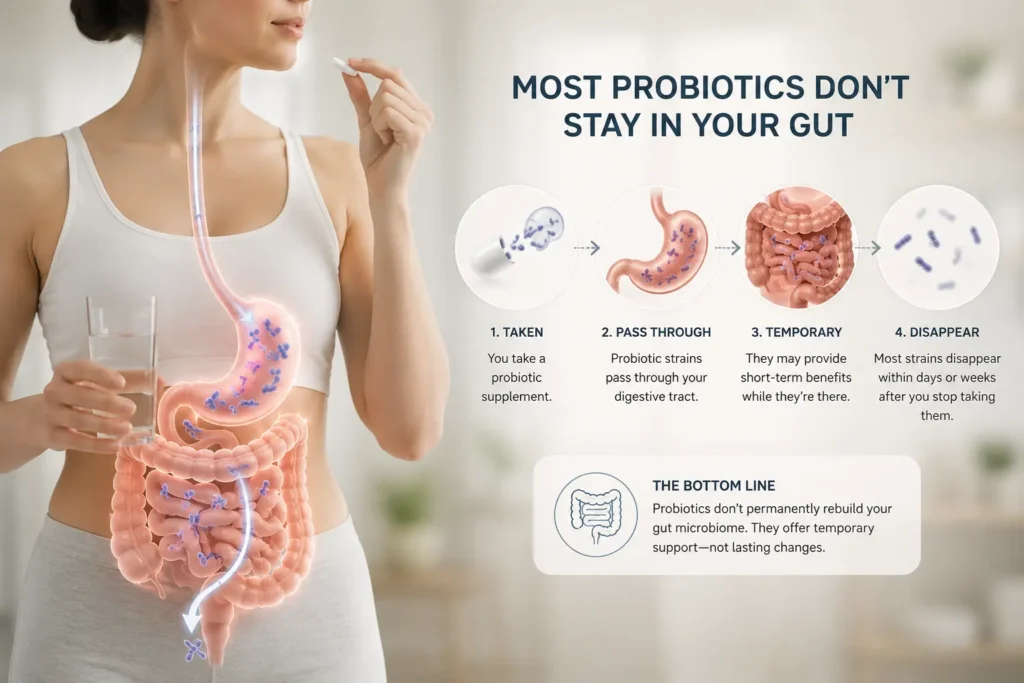
Research shows that most probiotic strains temporarily pass through the digestive tract and disappear within days or weeks after supplementation stops. They generally do not become permanent residents of your microbiome.
This means many people continue taking probiotics simply to maintain the temporary presence of those bacteria rather than creating lasting changes.
Rather than recommending lifelong supplementation, most experts encourage a personalized approach based on an individual’s symptoms, medical history, and specific health goals
Your Gut Microbiome Is Unique
One of the most fascinating discoveries in microbiome research is that probiotics affect everyone differently.
A landmark study published in Cell found that some individuals readily accepted probiotic bacteria, while others resisted colonization almost entirely. Even more interesting, researchers found that in some people, probiotics actually delayed the natural recovery of the gut microbiome after antibiotics compared with allowing the microbiome to recover on its own or using an individual’s own stored microbiota.
This reinforces that probiotics are not a one-size-fits-all solution.
More Isn’t Always Better
Although probiotics are generally safe for healthy adults, they are not completely risk-free.
Potential concerns include:
- Lack of evidence supporting lifelong use
- Temporary rather than permanent microbiome changes
- Possible delays in natural microbiome recovery after antibiotics in some individuals
- Rare bloodstream infections in severely immunocompromised or critically ill patients
- Theoretical concerns regarding antibiotic resistance gene transfer between bacteria

These risks are uncommon in healthy individuals, but they remind us that supplements should be used thoughtfully rather than automatically.
What Do Medical Experts Recommend?
Major gastroenterology organizations do not recommend routine daily probiotic use for everyone.
Instead, probiotics are recommended only for specific conditions where clinical evidence supports their use, such as:
- Certain cases of antibiotic-associated diarrhea
- Select patients at risk for recurrent Clostridioides difficile infection
- Some individuals with irritable bowel syndrome using specific strains
- Certain inflammatory bowel disease protocols under physician guidance
Importantly, these recommendations are typically for short-term treatment, not lifelong supplementation.
So How Can You Support a Healthy Gut?
If your goal is long-term gut health, the strongest scientific evidence points toward lifestyle—not supplements.

Healthy habits that consistently support a diverse microbiome include:
- Eating a wide variety of fruits and vegetables
- Increasing dietary fiber
- Including fermented foods if tolerated
- Exercising regularly
- Prioritizing quality sleep
- Managing stress
- Avoiding unnecessary antibiotic use
These strategies nourish your body’s own beneficial bacteria and promote a healthier, more resilient microbiome over time.
The Bottom Line
Probiotics can be valuable tools when used appropriately, but they should not be viewed as a lifelong requirement for everyone.
Current research suggests that their benefits are highly individualized, many strains only temporarily inhabit the gut, and long-term safety and effectiveness remain incompletely understood.
Instead of asking, “Should everyone take a probiotic forever?” a better question is: “Is this probiotic, at this dose and strain, appropriate for this patient at this time?”
As with any supplement or medication, personalized care should always outweigh marketing claims. When it comes to gut health, there is no substitute for evidence-based medicine, a balanced diet, and healthy lifestyle habits.